
Tag: observational drawing

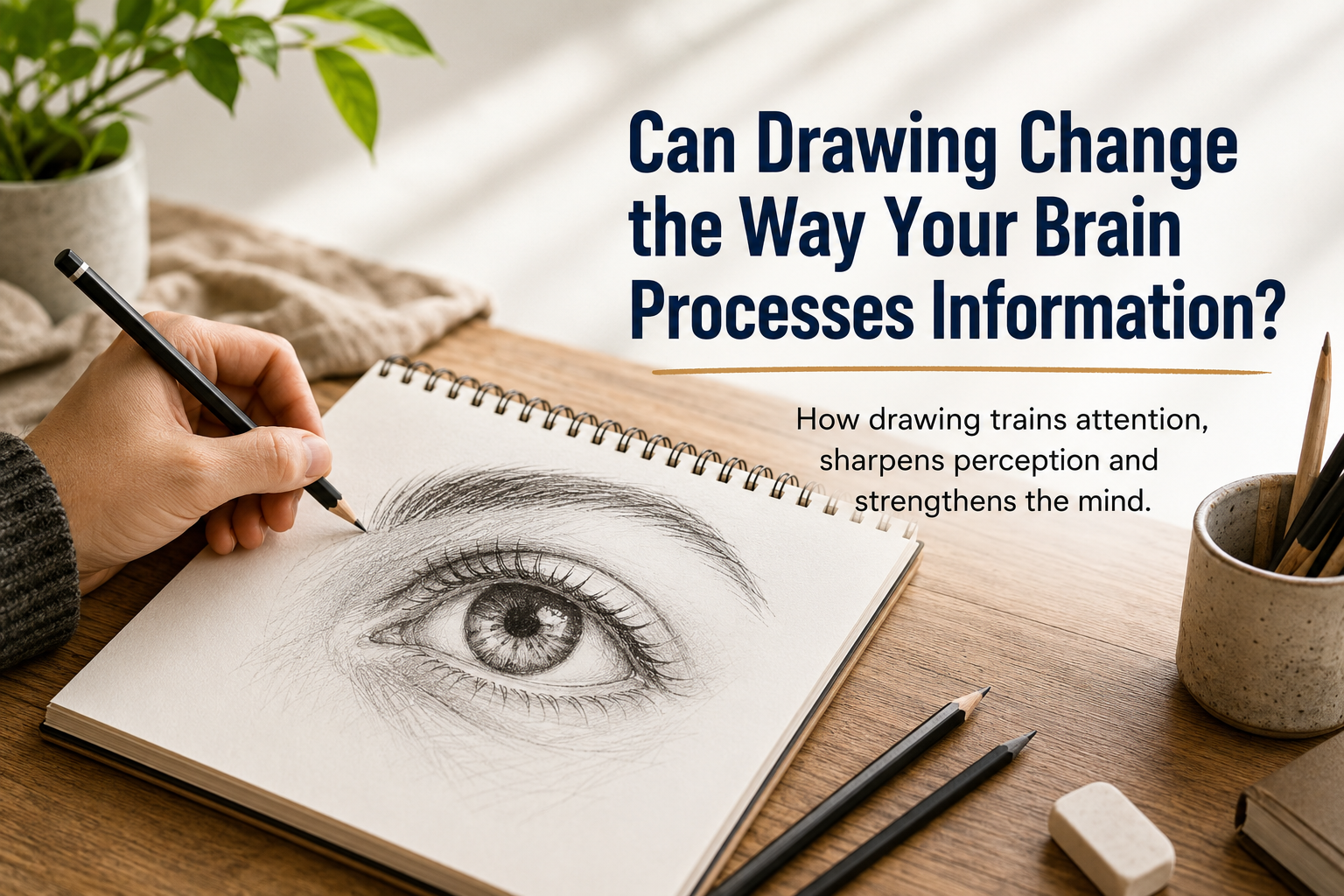
Hand drawing an eye in a sketchbook with the article title, “Can Drawing Change the Way Your Brain Processes Information?” and subtitle about attention, perception and the mind. May 25, 2026

Can Drawing Change the Way Your Brain Processes Information?

Most people think drawing depends on artistic talent, as though some people are simply born with it and others aren’t. But drawing is much more interesting than that. At its deepest level, drawing trains the mind to see more accurately. When you draw, you have to slow down. You have to look again. You have to notice shape, edge, distance, proportion, space, shadow and relationship. You begin to see the difference between what’s actually in front of you and what your mind assumes is there.
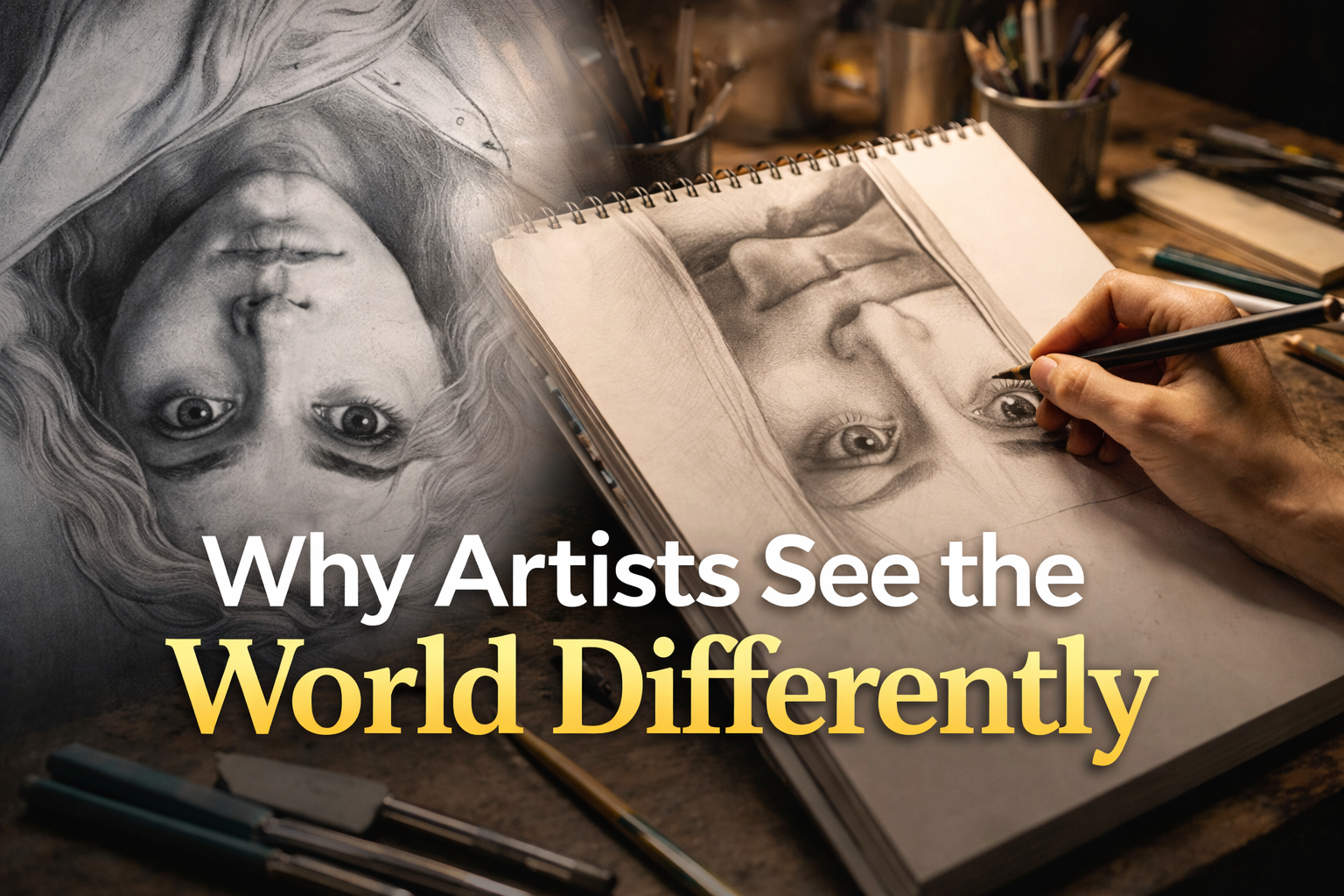
An artist drawing a portrait Apr 27, 2026

Why Artists See the World Differently

When people look at a skilled artist’s work, the assumption is that they are naturally gifted, that they have access to something others don't. That assumption feels justified because the difference in output can be extreme. However, it's also fundamentally wrong. Artists are not seeing a different world. They are seeing the same world with less interference. The difference isn't ability in the hand. It's organisation of perception. It's important to note that the gap between artist and non-artist isn't fixed. It's trainable.

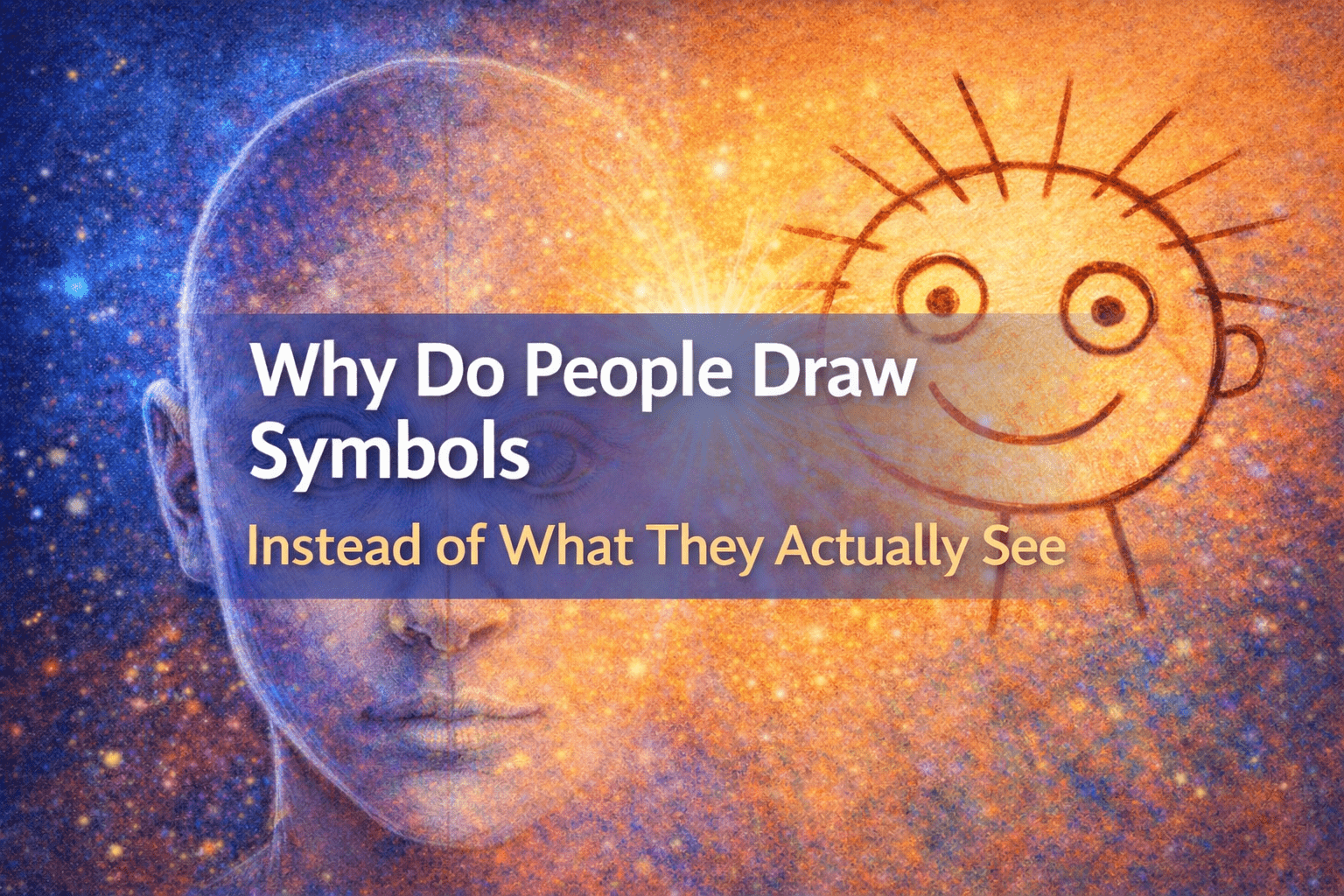
Image of a head in correct proportions and a child's drawing of a head next to it Mar 23, 2026

Why Do People Draw Symbols Instead of What They See?

Most people feel reasonably confident that they could draw a face from memory. Try a simple experiment. Take a sheet of paper and draw a head. Place the eyes where they belong, then add the nose and mouth. When psychologists examine these drawings, a consistent pattern appears. Anatomically, the eyes sit roughly halfway between the top of the head and the chin. In drawings produced from memory, the eyes are usually placed noticeably higher than this midpoint. The same pattern appears in children and adults across many cultures.