The Energy You Didn’t Know You Needed: Reiki Secrets for Christmas
Let’s explore some powerful Reiki secrets you can use to keep your energy flowing and your spirits high over Christmas.

 Dec 22, 2024
Let’s explore some powerful Reiki secrets you can use to keep your energy flowing and your spirits high over Christmas.
 Dec 11, 2024
If you’re looking to learn Reiki, obviously you’re going to want to know what your investment is. So, how much does Reiki cost?
 Dec 30, 2023
When we connect to abundance, our lives can become truly spectacular. A high-energy life is much better than a drudge through our problems.
 Aug 22, 2023
When I first came across a couple of videos on YouTube from 2012 and 2014 of the Indian mystic and entrepreneur Sadhguru criticising the practice of energy healing, I had to smile. What he had to say surprised me and delighted me. Here was a well-known spiritual teacher, going public and criticising the practice of energy healing. I’m a teacher of Reiki. From time to time, I also give other people Reiki treatments. And I loved what Sadhguru had to say. As a teacher of Reiki not only do I stand by Sadhguru’s words but promote the same views in my Reiki workshops. Sadly, those YouTube videos were deleted some time ago, but not before I had written down exactly what he had to say. This is a composite of the two videos: “(Energy healers) meddling with another person’s life process without knowing the whole of it is irresponsible… Any kind of meddling with other people’s energies is very juvenile. It’s coming out of a certain immaturity and a certain egoistic state of wanting to play God… Any problem in the body or in the mind is coming up only as an indication of a deeper situation… All chronic illnesses are like this. They’re just indicators of a deeper problem which exists. If you erase the indicator, it will find expression in some other way. They are only erasing the effect. They are unable to remove the cause. Just manipulating energies and erasing the effect is not good for you in the deeper sense of life. And for many people, their disease is not a curse. All this healing is a very juvenile thing.” (Sadghuru, 2012/2014) I totally love that! Why? You might think that doesn’t square with my work as a Reiki teacher and practitioner. Let me tell you, because Sadhguru’s comments don’t in any way contradict the basic philosophy of the system of Reiki and the mechanics of how the system works. When I’m teaching a Reiki class, I make it clear to my students that I am not going to be teaching them how to be healers. I also tell them that I am not a healer, have no aspirations to ever be one, and that I absolutely do not like to be referred to as a healer. I have never healed anyone. I have, however, facilitated many healings and seen incredible and often miraculous healings take place over the years. My role in that was not to ‘make something happen’ or to ‘fix a problem’ but to be a neutral observer and witness of events. My role was to simply be still, to flow, and to merge with the energy. To become one with it. You see, the core teaching of the Reiki system is that you cannot ‘give’ someone Reiki. We all know this from our 1st Degree training. It’s one of the most basic teachings of the system. Reiki is drawn in by the person in need of healing, through the practitioner, who is just a channel or conduit for the energy. In twenty-five years of teaching and practicing Reiki, I have never once ‘given’ someone Reiki. And this is as it should be. If it were possible to push Reiki into someone, to make them take it based on my own limited understanding of their energetic needs, I would probably be best to abandon the practice and do something much more socially responsible, like get my ego in check. Thankfully, as we all also know from our 1st Degree training, Reiki is an intelligent energy and knows exactly where to go and what to do without any input from the practitioner. As I tell my students, in a sense, once their hands are on the client, the treatment process is really none of their business, at least in terms of the healing that is taking place, which can often be happening on very subtle and imperceptible levels of being. I ask them to keep out of the way and let the energy do what it needs to do. They don’t need to guide it, try to manipulate it, force it or do anything else that comes from a ‘doing mode’ perspective. The more we can just ‘be’ with the process and embody the qualities of an empty channel, which means staying in a meditative state of awareness during the treatment process, the better the treatment will be for our client. When we can just ‘be’ with the process, with the treatment, we start to embody the true nature of the universe, we start to connect to the true nature of reality, and this can have a profound healing effect on those around us. All of this goes right to the root of what Sadhguru was saying. To call oneself a healer is inaccurate. Not even Jesus, as far as we know, referred to himself in this way. A Reiki practitioner is not healing anyone. This was summed up beautifully by Bodo Baginski and Shalila Sharamon in their book Reiki Universal Life Energy: “… do not be disappointed if your expectations are not fulfilled immediately. With Reiki, nothing is to be achieved by pure willpower. Our egos have to take second place instead, which is not bad for our development. As Reiki channels, we do not do the healing ourselves but are simply neutral observers and witnesses of events. For this reason, we should never disapprove of a patient’s symptoms. It is not our task to fight against an illness but to pass on Reiki energy and await the results, which will always be the best ones possible.” (Baginski and Sharmon, 1988) As a practitioner of Reiki, we don’t necessarily know what the true problem is with our client. We may know the symptoms, but can we say for certain that we know the original cause of the problem? Almost certainly not! What happens when we give a Reiki treatment, and this is a unique aspect of the Reiki system as far as
Read More
 Aug 16, 2023
I don’t know about you, but I’ve got tired of the endless claims on the internet about which is the most powerful healing technique. Is it Pranic Healing? Is it Reiki? Is it Vortex Healing? So many claims and so many different healing modalities out there and frankly, from my experience, all the hype, and the question itself, is total bullshit. Because it’s not about which is the most powerful. That’s just ego. In reality, the question should be about whether the healing modality is a good fit for the healing required and whether it delivers the results. And if it does, that STILL doesn’t make it the most powerful. It makes it the appropriate intervention in that particular case. And what does the concept of ‘most powerful’ even mean? This is ego on a rampage. ‘Power’ is a perceptual concept and is reliant on many variables and not all of them are related. The system I know best is Reiki. I’ve been teaching it for 25 years and have written two books on the subject (you can find them here: Mindfulness Meditation & The Art of Reiki and Reiki Jin Kei Do: The Way of Compassion & Wisdom) and I think it’s a pretty powerful intervention for some people. For some, it’s a waste of their time and money, because other things serve them better. I don’t know about Pranic Healing. I know lots of ex-Pranic Healers who wouldn’t touch that system again with a barge pole. Why? I’ve no idea and it’s never interested me to find out. I also know nothing whatsoever about Vortex Healing or for that matter any other healing modality. Reiki is my thing and I’m happy to stick to that. It does what I need it to do for me personally as a spiritual development practice. What I do know, from years of experience is that there is one system of healing and more importantly, spiritual development, that is significantly better and more powerful than Reiki. When I say, ‘more powerful’, I mean in terms of the specific mechanism of how the energy in Reiki works and it’s the antithesis of how energy works in all other energy healing methods (as far as I can tell). That system is called Buddho. Buddho is the original esoteric Buddhist practice from which modern secular Reiki developed. When a practitioner works with Reiki, he or she is calling on the energy that manifests within the Buddho system. Reiki is just a conduit for Buddho. It makes sense then that Buddho without the mediating device of Reiki, is more powerful than when Reiki is the filter through which the energy passes. I’ve taught Reiki to 1000-plus people over the years and probably Buddho to only a couple of hundred or so, but those who have taken Buddho training have all said that they prefer working with Buddho, rather than Reiki. Why? It gets results when Reiki doesn’t. That’s not to say that Buddho is somehow better than Reiki. Each healing case requires its own specific form of intervention. Sometimes Reiki is the thing, sometimes Buddho. But regardless, Buddho does get to the root of the problem quicker, more decisively, and more powerfully. One of my students once said that Reiki starts out very gently and then goes on increasing until it becomes extremely powerful. It’s like there is a gentle flow to it as it builds and builds. They said that Buddho on the other hand, is like a flash of lightning; it’s full power instantly and very fast. This is true. This is how Buddho works. I don’t know about other healing systems. The comparison between them and Reiki is pointless because they work on a different principle. It’s like comparing a plane to a helicopter. But Buddho and Reiki are of the same order. Buddho is before and after modern Reiki. It’s its origins and it’s the destination that Reiki leads to. For me, working with either Reiki or Buddho is primarily about my own personal spiritual journey. I’m not a fan of practicing energy healing and avoid it whenever I can, passing potential clients on to my own students. I just find the practice boring, though I’m always delighted when someone finds that their problem is resolved or alleviated because of a treatment I’d given them. If I do find myself giving a Reiki treatment, I tend to blend Buddho techniques in with Reiki. The two systems are essentially one in any case, so there’s seamless compatibility. Moving in and out of Reiki/Buddho techniques in a state of flow is the best of energy healing it seems to me. I think Reiki has a lot more potential than just energy healing though. And Buddho even more so. They both point in the same direction, but Buddho is the rocket booster that Reiki lacks. Buddho is a method straight out of Highest Yoga Tantra of Tibet (the Reiki fundamentalists will of course repeat their tired mantra that ‘everything Reiki comes from Japan’. No, it doesn’t and Buddho is the proof of that). It’s an expression of Mantrayana and thus an amazing tool of personal liberation. This is the system that Usui (the founder of the system of Reiki) accessed in formulating his contemporary understanding which we know of as Reiki. If you haven’t learned Buddho, I suggest you do. You’ll need to find yourself a teacher of Reiki Jin Kei Do because the Buddho teachings are held exclusively within that tradition. Or you could just go straight to my courses page and check out whether I’m running any Buddho classes soon. You can find it here: Courses. Buddho is a system however that is for the committed and serious spiritual seeker. It requires dedication and practice of the teachings. If you want to know what the most powerful healing technique is, then it has to be Buddho. The Highest Yoga Tantric practices of Tibet, pretty much top everything else, especially Western New Age methods.
Read More
 Jan 21, 2022
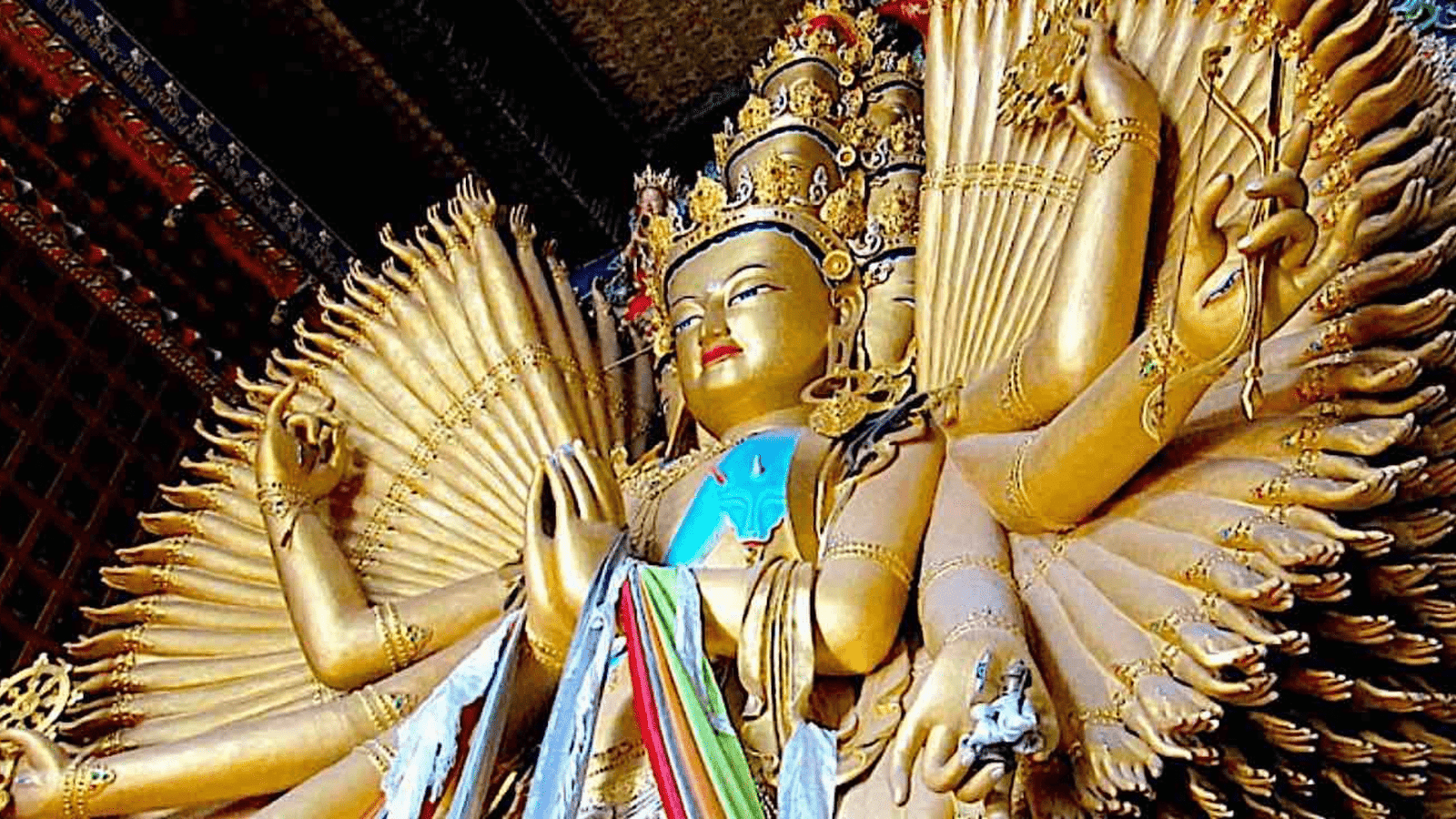
If you want to explore the true depths of Reiki, then you need to learn Buddho. Without Buddho, there is no Reiki.
 Dec 24, 2021
I’m going to get right to the point here and say, no, you do not have to ask permission before ‘sending’ Reiki.
 Dec 24, 2021
What are the benefits of Reiki? How long do the benefits of Reiki last and why do I feel worse after a Reiki treatment? All the answers here
 Dec 24, 2021
Reiki in the military has a long history, dating back to Chujiro Hayashi who trained initially on the instructions of the Japanese navy.
 Dec 24, 2021
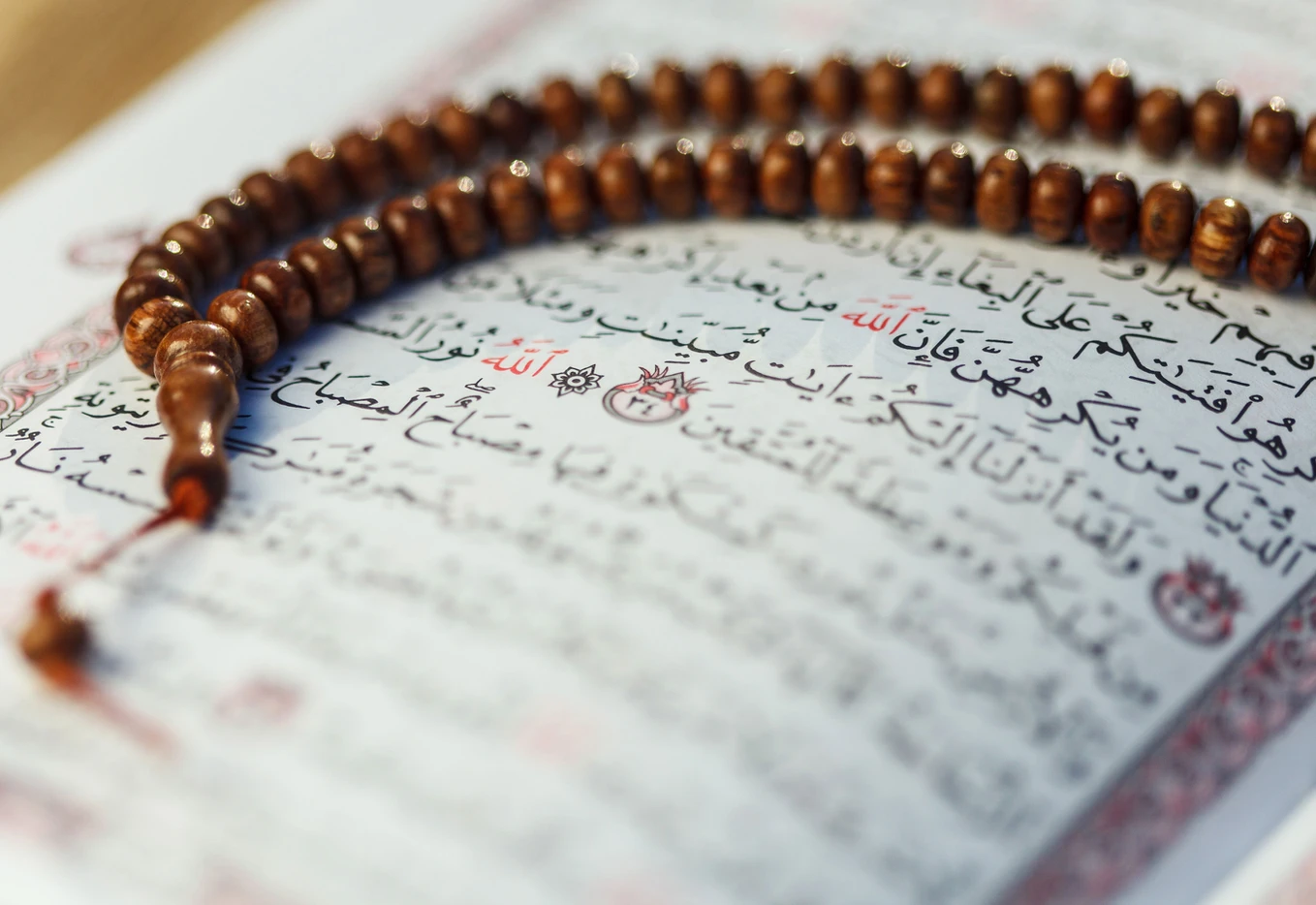
Are the Reiki symbols against religion? Where exactly do they come from, what do they mean, what do they do and how do they do it?