Rock Bottom Isn’t the End Here’s How to Rise and Rebuild in 2025
Reiki can help leaders, entrepreneurs, and visionaries boost confidence, sharpen focus, and unlock prosperity. Are you ready to transform?

 Jan 6, 2025
Reiki can help leaders, entrepreneurs, and visionaries boost confidence, sharpen focus, and unlock prosperity. Are you ready to transform?
 Jan 6, 2025
Reiki can help leaders, entrepreneurs, and visionaries boost confidence, sharpen focus, and unlock prosperity. Are you ready to transform?
 Jan 1, 2025
Unlock the power of Reiki for leadership! Discover how this spiritual discipline boosts confidence, clarity, and success.
 Dec 22, 2024
Let’s explore some powerful Reiki secrets you can use to keep your energy flowing and your spirits high over Christmas.
 Apr 4, 2024
An art and spirituality retreat can be a powerful way to engage in some self-care, find your true self, and make positive life changes.
 Dec 30, 2023
When we connect to abundance, our lives can become truly spectacular. A high-energy life is much better than a drudge through our problems.
 Dec 7, 2023
Join me on this incredible journey through the transformative power of art, meditation, and energetic connection and alignment.
 Nov 9, 2023
Practicing Reiki as a spiritual discipline is almost never discussed in any books, any websites and none of the national Reiki organisations. So prevalent is the obsession with Reiki as nothing more than a hands-on energy healing system, that its larger, more challenging but more important aspects are by and large, pretty much ignored. It could be argued of course that even if we are focused only on using the energy healing part of the system, we’re still using it as a form of personal spiritual practice because, on a macrocosmic level, there is no ‘other’ to give a healing session to. But that’s a philosophical route we don’t need to go down as it just leads to a very laissez-faire approach to personal spiritual development. Central to the practice of Reiki is mindfulness meditation. Mindfulness is the ability to be aware of what is going on right now: not reflecting on what has passed and not projecting forward into what has yet to come, and doing so, without judgement. This is the bedrock and foundation of the entirety of the Reiki system in all its numerous ways, facets, and nuances of expression. When we think of mindfulness, we tend to think of what is going on in our head; it is more accurate to think about what is going on in the whole body. Consciousness is not just located in the head; it is everywhere in the human being, and we should keep this in mind when we work with mindfulness as a meditation practice. When we practice Reiki, most of us are very much ‘living in our heads’. We ignore the presence of our physical body as our minds wander all over the place, projecting forwards into things that have not yet happened, or reflecting on what has already passed. Our minds are either forming their own arbitrary narrative structures; they’re somewhere other than with what is happening right now or are busy speculating, forming opinions, making judgements, or otherwise engaged in a mental commentary based on the sensory data they are receiving. This gets mashed together with the storehouse of experiences, impressions, and other mental events that the mind has filed away to form new lenses through which to view the world, and none of this is helpful to us or, in a healing context, beneficial to the person receiving the healing session. So how to practice mindfulness? Physical Posture Firstly, we need to consider our posture. Given that Reiki is a Japanese practice, it might be appropriate to sit in seiza (which means ‘correct sitting’). This posture, however, designed so that samurai can get up quickly during a fight, can be extremely uncomfortable for those not used to it, and given that it has only existed in Japanese culture for around 200 years can easily be discarded for less painful postures. If seiza doesn’t work for you, you could try sitting cross-legged in a lotus or half-lotus posture. If you also find that difficult, you could try sitting in a half lotus over an extended period, to see if your leg muscles will loosen up so that you can get into a full lotus more easily. The main difference between the half and full lotus is that the knees are both touching the floor in the full lotus, which gives a much more stable posture. If your knees are floating in the air higher than your hips, you are unstable. Stability in meditation (both body and mind) is a critical element. You should keep your spine straight, resting in its natural curve, with your shoulders relaxed but in line with your ears. Also, pull your chin in so that it is not tilting upwards or downwards. Place your hands loosely in your lap. You may also like to place a cushion on your lap to take the weight of your hands and arms. Sit with dignity, as if you are holding up the sky with your head. If you are using a chair, sit independently of its back. To begin with, you might have some lower back pain. Check that your knees are not higher than your hips. If this is the case, you will overwork your lower back and cause discomfort. Place a firm cushion on the chair first if necessary. If you still have pain in this area, it might be because most of us rarely exercise our lower backs due to sitting for long periods. Normally we lean against the back of the chair, allowing our lower back muscles to rest. When we sit independently of the chair back, these muscles must start working. It is worth just sitting through the discomfort for a period until your back muscles get used to working properly. Of course, if you have lower back problems or other physical restrictions that mean you can’t assume a good meditation posture easily, you should use some sort of support. It is always best to be fully independent of any physical support as much as you can, however. Our bodies should be physically independent, and our minds should be mentally independent. It is also possible to simply lie down to meditate and you may find this to be of great benefit if you struggle with sitting for any length of time. A word of warning: it is best not to lie on your bed as we have so programmed our minds that lying on the bed means it’s time to sleep, that it is extremely difficult to do so and stay focused and alert. In establishing a successful meditation practice, you must ultimately find what works for you. Perhaps you could experiment and try out different approaches. This is especially true if you suffer from some physical impairment or if you are bedridden or have some other issues that prevent you from assuming a traditional meditation posture. If none of these traditional approaches are possible, it’s perfectly acceptable to get creative and find your own way with this. The
Read More
 Oct 29, 2023
How can a Japanese energy-healing discipline help to transform your mindset? Reiki has always been about your own personal development.
 Oct 12, 2023
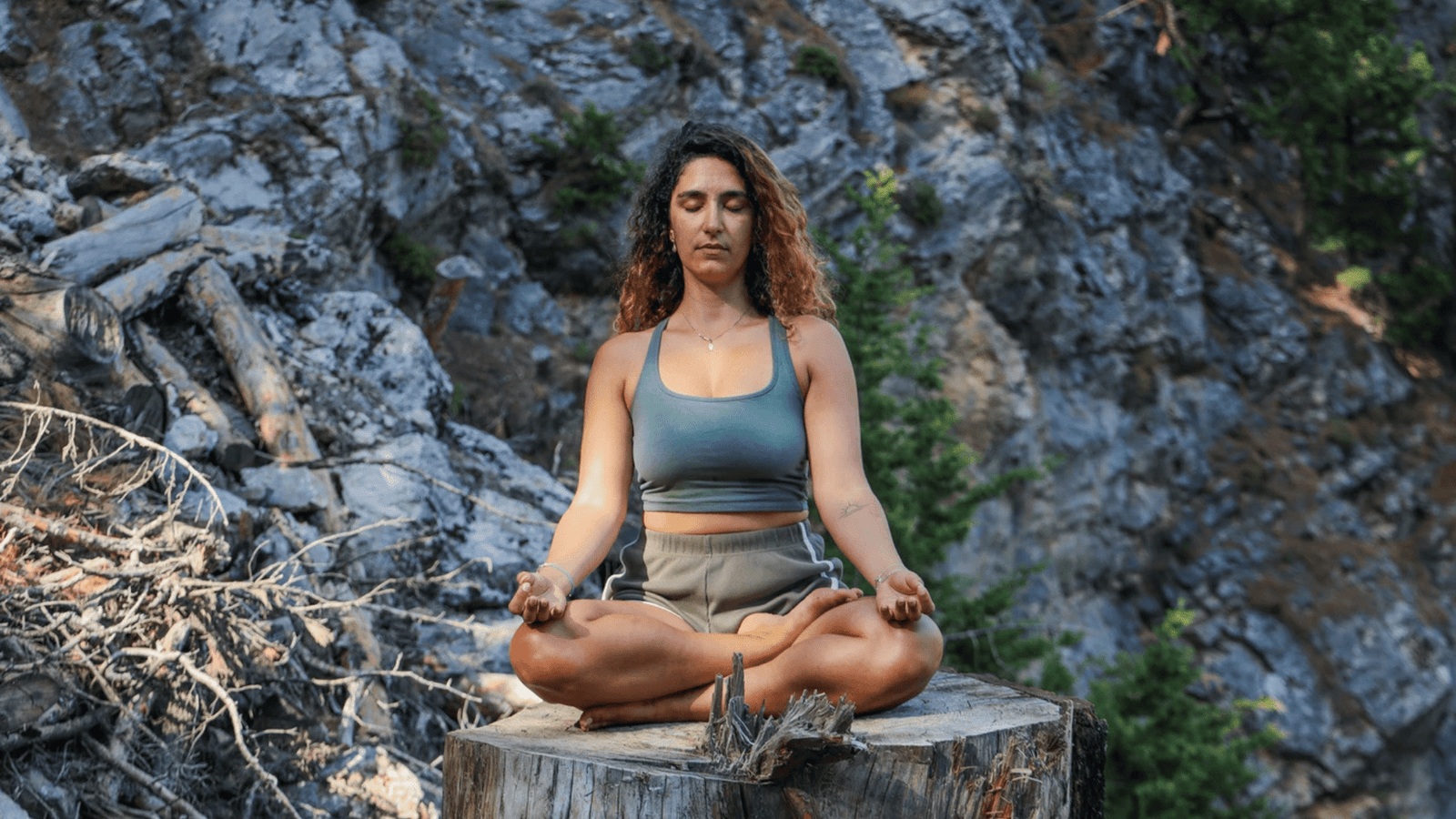
Vipassana Vs Samatha Meditation, which should you be doing? And what is the difference between the two approaches?